Buy welequi.be ?
We are moving the project
welequi.be .
Are you interested in purchasing the domain
welequi.be ?
domain@kv-gmbh.de · 0541-91531010
Buy welequi.be ?
What is the enzyme kinetics of Xase?
Xase enzyme kinetics typically follow Michaelis-Menten kinetics, where the rate of the reaction is dependent on the concentration of the substrate. As the substrate concentration increases, the reaction rate also increases until it reaches a maximum rate known as Vmax. The enzyme-substrate complex formation is reversible, and the enzyme can dissociate from the substrate. Xase enzyme kinetics can be analyzed using methods such as Lineweaver-Burk plots to determine kinetic parameters like Km and Vmax. **
How do you calculate force in kinetics?
In kinetics, force is calculated using Newton's second law of motion, which states that force is equal to mass multiplied by acceleration (F = ma). To calculate force, you need to know the mass of the object and the acceleration it is experiencing. By multiplying the mass by the acceleration, you can determine the force acting on the object in the given direction. This calculation helps in understanding the relationship between the mass of an object, the acceleration it experiences, and the force required to produce that acceleration. **


Similar search terms for Kinetics
Top-Angebote
Products related to Kinetics:
-
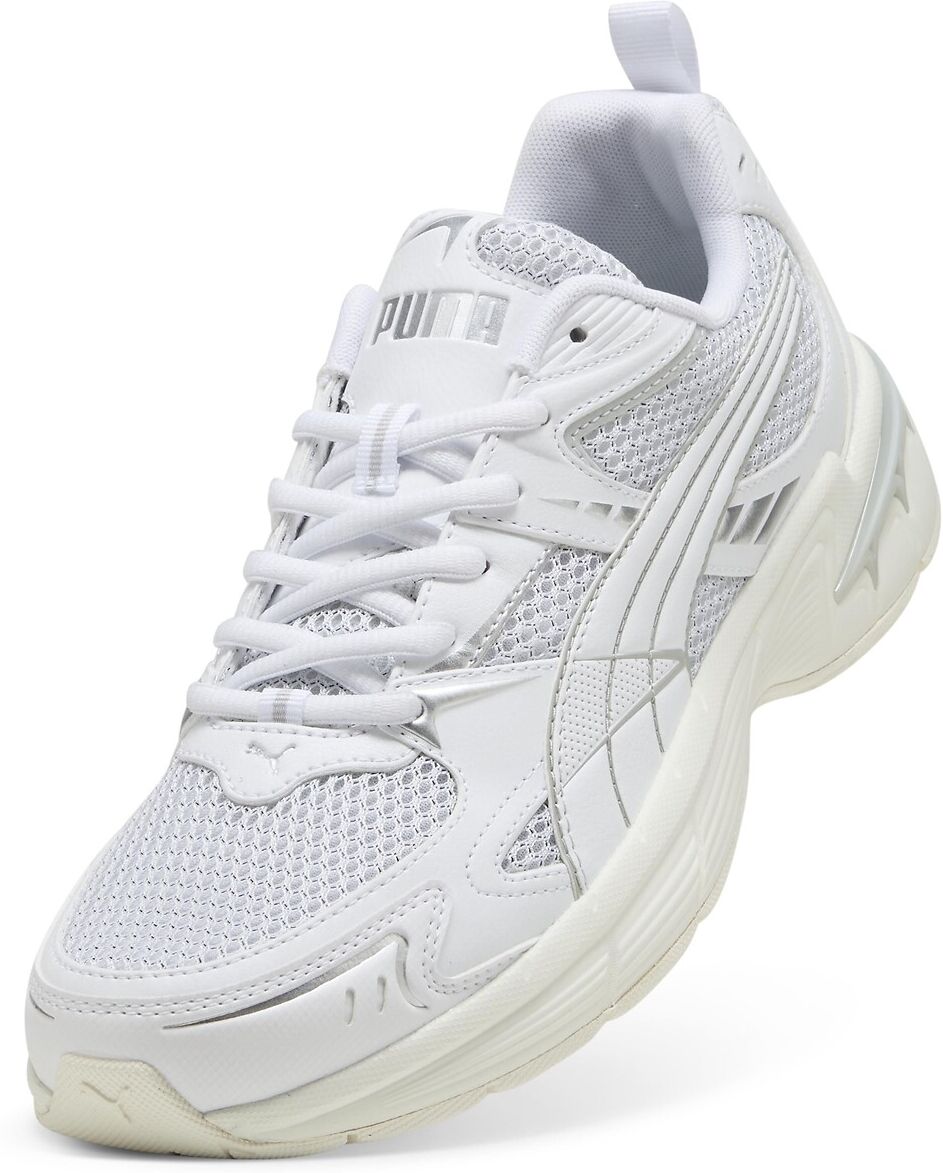
PUMA Baskets Milenio TechDétails produit • Type de sport : Running • Talon plat • Fermeture : A lacets Composition et Entretien • Dessus/Tige : 100% textile • Doublure : 100% textile • Semelle intérieure : 100% textile • Semelle extérieure : 100% caoutchouc Fiche produit relative aux qualités et caractéristiques environnementales • Origine de fabrication (piquage, montage, finition) : Chine Dernière mise à jour des informations : 02/04/202649,00 €*Shipping: 3,99 €Secure redirect to the provider
-
PUMA Baskets SHUFFLE TECHDétails produit • Usage sportswear • Talon plat • Fermeture : A lacets Composition et Entretien • Dessus/Tige : 100% autres matériaux • Doublure : 100% textile • Semelle intérieure : 100% textile • Semelle extérieure : 100% caoutchouc65,00 €*Shipping: 3,99 €Secure redirect to the provider
-
DIM THERMAL TECH LeggingDétails produit • Caleçon • Matière : coton Composition et Entretien • 54% coton, 21% polyester, 20% viscose, 5% élasthanne • Pour l'entretien, merci de vous référer aux indications figurant sur l'étiquette du produit • OEKO-TEX® Standard 100. La labellisation OEKO-TEX® Standard 100 contrôle les substances nocives des produits textiles via un label indépendant et international.24,59 €*Shipping: 3,99 €Secure redirect to the provider
-
PUMA Baskets Milenio Tech LTDétails produit • Usage sportswear • Talon plat • Fermeture : A lacets Composition et Entretien • Dessus/Tige : 92% textile, 8% autres matériaux • Doublure : 100% textile • Semelle intérieure : 100% textile • Semelle extérieure : 100% caoutchouc45,00 €*Shipping: 3,99 €Secure redirect to the provider


-
What is a question about bioenzyme kinetics?
One question about bioenzyme kinetics could be: "How does temperature affect the rate of enzyme-catalyzed reactions?" This question explores the concept of enzyme activity and how it is influenced by environmental factors. It also delves into the relationship between temperature and the kinetic energy of molecules, which can impact the speed of enzyme-substrate interactions. This question is important for understanding the practical applications of bioenzyme kinetics, such as optimizing conditions for industrial processes or understanding the effects of temperature on enzyme function in biological systems. **
-
Can you help me with enzyme kinetics?
Yes, I can help you with enzyme kinetics. Enzyme kinetics is the study of the rates at which enzymes catalyze chemical reactions. It involves understanding the factors that affect enzyme activity, such as substrate concentration, pH, and temperature. I can provide information on the different types of enzyme kinetics experiments, the Michaelis-Menten equation, and how to analyze enzyme kinetics data. Let me know if you need more specific information or assistance with a particular aspect of enzyme kinetics. **
-
Can you help me with reaction kinetics in chemistry?
Yes, I can help you with reaction kinetics in chemistry. Reaction kinetics is the study of the rates at which chemical reactions occur and the factors that influence these rates. I can explain the concepts, equations, and theories related to reaction kinetics, as well as provide examples and practice problems to help you understand the topic better. Feel free to ask any specific questions you may have about reaction kinetics, and I will do my best to assist you. **
-
What kind of mathematical problems are there in kinetics?
In kinetics, mathematical problems often involve solving differential equations to describe the rate of chemical reactions or the change in concentration of reactants and products over time. These equations can be complex and require knowledge of calculus and algebra to solve. Additionally, problems in kinetics may involve determining reaction mechanisms, rate constants, and reaction orders, all of which require mathematical analysis and interpretation. Overall, kinetics involves a variety of mathematical problems that require a strong understanding of mathematical concepts and their application to chemical reactions. **

What kind of calculation tasks are there for kinetics?
In kinetics, there are various types of calculation tasks that can be performed. Some common examples include determining reaction rates, calculating rate constants, predicting reaction mechanisms, and analyzing reaction orders. These calculations often involve using experimental data, such as concentration changes over time, to derive important kinetic parameters that describe the rate of a chemical reaction. Additionally, kinetic calculations may also involve determining activation energies, reaction enthalpies, and other thermodynamic properties that influence the rate of a reaction. **
What is the kinetics of a first-order chemical reaction?
The kinetics of a first-order chemical reaction is characterized by the rate of the reaction being directly proportional to the concentration of the reactant. This means that as the concentration of the reactant decreases, the rate of the reaction also decreases. The rate law for a first-order reaction is typically expressed as rate = k[A], where k is the rate constant and [A] is the concentration of the reactant. The integrated rate law for a first-order reaction is ln([A]t/[A]0) = -kt, where [A]t is the concentration of the reactant at time t, [A]0 is the initial concentration, k is the rate constant, and t is the time. **
Top-Angebote
Products related to Kinetics:
-
PUMA Short fitness/gymDétails produit • Taille : standard • Convient à la pratique sportive Composition et Entretien • 85% polyester, 15% élasthanne • Pour l'entretien, merci de vous référer aux indications figurant sur l'étiquette du produit21,00 €*Shipping: 3,99 €Secure redirect to the provider
-
SUPERDRY Doudoune outdoor EverestDétails produit • Longueur : court • Col montant • Fermeture zippée • Capuche fixe réglable par cordon • 2 poches biais • Poignets réglables par bouton-pressions Composition et Entretien • Matière principale : 100% polyester • Doublure : 100% polyester • Garnissage : 100% polyester • Température de lavage 30° cycle délicat • Ne pas repasser / blanchiment interdit • Ne pas sécher en tambour • Pas de nettoyage à sec149,99 €*Shipping: 3,99 €Secure redirect to the provider
-
PUMA Baskets Milenio TechDétails produit • Type de sport : Running • Talon plat • Fermeture : A lacets Composition et Entretien • Dessus/Tige : 100% textile • Doublure : 100% textile • Semelle intérieure : 100% textile • Semelle extérieure : 100% caoutchouc Fiche produit relative aux qualités et caractéristiques environnementales • Origine de fabrication (piquage, montage, finition) : Chine Dernière mise à jour des informations : 02/04/202649,00 €*Shipping: 3,99 €Secure redirect to the provider
-
PUMA Baskets SHUFFLE TECHDétails produit • Usage sportswear • Talon plat • Fermeture : A lacets Composition et Entretien • Dessus/Tige : 100% autres matériaux • Doublure : 100% textile • Semelle intérieure : 100% textile • Semelle extérieure : 100% caoutchouc65,00 €*Shipping: 3,99 €Secure redirect to the provider
-
What is the enzyme kinetics of Xase?
Xase enzyme kinetics typically follow Michaelis-Menten kinetics, where the rate of the reaction is dependent on the concentration of the substrate. As the substrate concentration increases, the reaction rate also increases until it reaches a maximum rate known as Vmax. The enzyme-substrate complex formation is reversible, and the enzyme can dissociate from the substrate. Xase enzyme kinetics can be analyzed using methods such as Lineweaver-Burk plots to determine kinetic parameters like Km and Vmax. **
-
How do you calculate force in kinetics?
In kinetics, force is calculated using Newton's second law of motion, which states that force is equal to mass multiplied by acceleration (F = ma). To calculate force, you need to know the mass of the object and the acceleration it is experiencing. By multiplying the mass by the acceleration, you can determine the force acting on the object in the given direction. This calculation helps in understanding the relationship between the mass of an object, the acceleration it experiences, and the force required to produce that acceleration. **
-
What is a question about bioenzyme kinetics?
One question about bioenzyme kinetics could be: "How does temperature affect the rate of enzyme-catalyzed reactions?" This question explores the concept of enzyme activity and how it is influenced by environmental factors. It also delves into the relationship between temperature and the kinetic energy of molecules, which can impact the speed of enzyme-substrate interactions. This question is important for understanding the practical applications of bioenzyme kinetics, such as optimizing conditions for industrial processes or understanding the effects of temperature on enzyme function in biological systems. **
-
Can you help me with enzyme kinetics?
Yes, I can help you with enzyme kinetics. Enzyme kinetics is the study of the rates at which enzymes catalyze chemical reactions. It involves understanding the factors that affect enzyme activity, such as substrate concentration, pH, and temperature. I can provide information on the different types of enzyme kinetics experiments, the Michaelis-Menten equation, and how to analyze enzyme kinetics data. Let me know if you need more specific information or assistance with a particular aspect of enzyme kinetics. **
Similar search terms for Kinetics
-
DIM THERMAL TECH LeggingDétails produit • Caleçon • Matière : coton Composition et Entretien • 54% coton, 21% polyester, 20% viscose, 5% élasthanne • Pour l'entretien, merci de vous référer aux indications figurant sur l'étiquette du produit • OEKO-TEX® Standard 100. La labellisation OEKO-TEX® Standard 100 contrôle les substances nocives des produits textiles via un label indépendant et international.24,59 €*Shipping: 3,99 €Secure redirect to the provider
-
PUMA Baskets Milenio Tech LTDétails produit • Usage sportswear • Talon plat • Fermeture : A lacets Composition et Entretien • Dessus/Tige : 92% textile, 8% autres matériaux • Doublure : 100% textile • Semelle intérieure : 100% textile • Semelle extérieure : 100% caoutchouc45,00 €*Shipping: 3,99 €Secure redirect to the provider
-
PUMA Baskets SHUFFLE TECH OGDétails produit • Usage sportswear • Talon plat • Fermeture : A lacets Composition et Entretien • Dessus/Tige : 51% textile, 49% autres matériaux • Doublure : 100% textile • Semelle intérieure : 100% textile • Semelle extérieure : 100% caoutchouc70,00 €*Shipping: 3,99 €Secure redirect to the provider
-
PUMA Baskets Milenio tech 2000 2ToneDétails produit • Usage sportswear • Talon plat • Fermeture : A lacets Composition et Entretien • Dessus/Tige : 100% textile • Doublure : 100% textile • Semelle intérieure : 100% textile • Semelle extérieure : 100% caoutchouc56,00 €*Shipping: 3,99 €Secure redirect to the provider
-
Can you help me with reaction kinetics in chemistry?
Yes, I can help you with reaction kinetics in chemistry. Reaction kinetics is the study of the rates at which chemical reactions occur and the factors that influence these rates. I can explain the concepts, equations, and theories related to reaction kinetics, as well as provide examples and practice problems to help you understand the topic better. Feel free to ask any specific questions you may have about reaction kinetics, and I will do my best to assist you. **
-
What kind of mathematical problems are there in kinetics?
In kinetics, mathematical problems often involve solving differential equations to describe the rate of chemical reactions or the change in concentration of reactants and products over time. These equations can be complex and require knowledge of calculus and algebra to solve. Additionally, problems in kinetics may involve determining reaction mechanisms, rate constants, and reaction orders, all of which require mathematical analysis and interpretation. Overall, kinetics involves a variety of mathematical problems that require a strong understanding of mathematical concepts and their application to chemical reactions. **
-
What kind of calculation tasks are there for kinetics?
In kinetics, there are various types of calculation tasks that can be performed. Some common examples include determining reaction rates, calculating rate constants, predicting reaction mechanisms, and analyzing reaction orders. These calculations often involve using experimental data, such as concentration changes over time, to derive important kinetic parameters that describe the rate of a chemical reaction. Additionally, kinetic calculations may also involve determining activation energies, reaction enthalpies, and other thermodynamic properties that influence the rate of a reaction. **
-
What is the kinetics of a first-order chemical reaction?
The kinetics of a first-order chemical reaction is characterized by the rate of the reaction being directly proportional to the concentration of the reactant. This means that as the concentration of the reactant decreases, the rate of the reaction also decreases. The rate law for a first-order reaction is typically expressed as rate = k[A], where k is the rate constant and [A] is the concentration of the reactant. The integrated rate law for a first-order reaction is ln([A]t/[A]0) = -kt, where [A]t is the concentration of the reactant at time t, [A]0 is the initial concentration, k is the rate constant, and t is the time. **
* All prices are inclusive of VAT and, if applicable, plus shipping costs. The offer information is based on the details provided by the respective shop and is updated through automated processes. Real-time updates do not occur, so deviations can occur in individual cases. ** Note: Parts of this content were created by AI.